

Domvs Romana
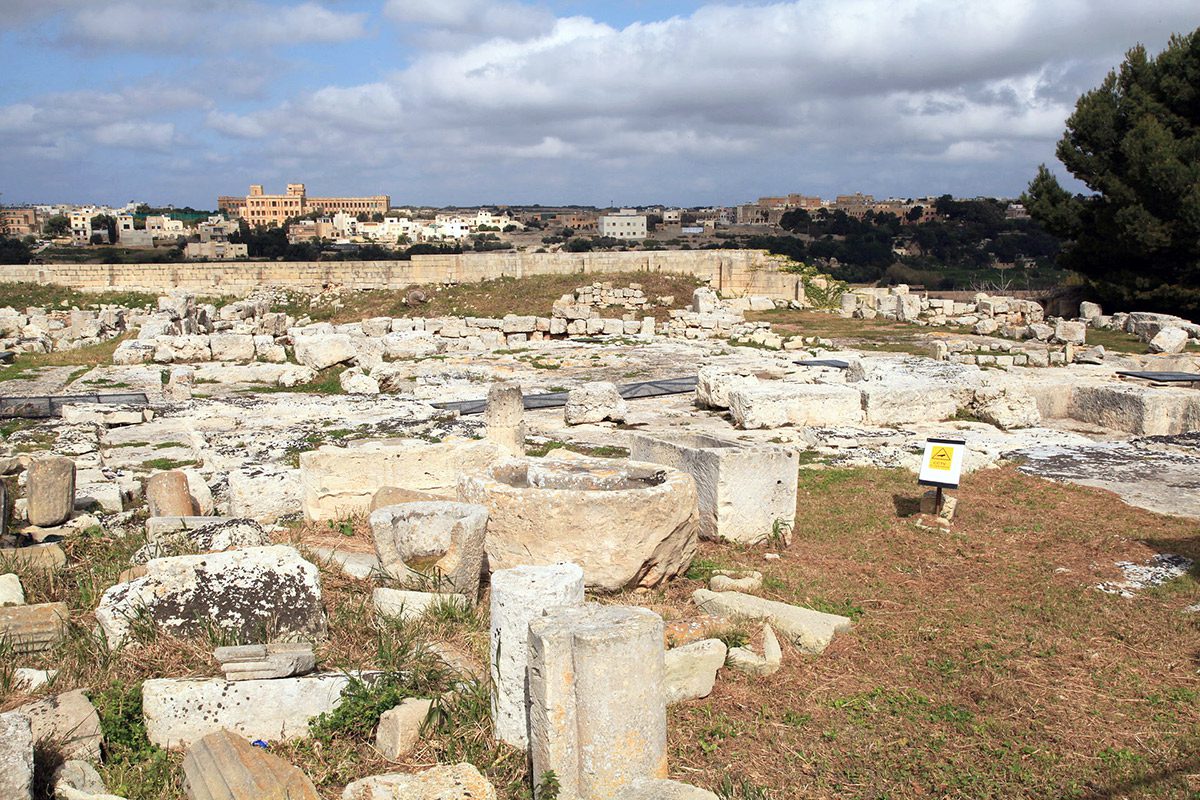
The Roman Villa or Domvs Romana is one of the most popular tourist attractions in Malta and is located in Rabat, just outside the entrance to Mdina.
The Domvs Romana is believed to have been built in the beginning of the 1st century BC, as an aristocratic town house (domus) within the Roman city of Melite. It is believed to have remained in use until the 2nd century AD. The house had a colonnaded peristyle inspired by ancient Greek architecture, and its best features are the well-made polychrome Hellenistic style mosaics found in the peristyle and the surrounding rooms, which show decorative motifs or mythological scenes. The mosaics were produced with extremely fine techniques created by highly skilled artists and are today one of the oldest arrangements from the western Mediterranean.
In the 11th century, during the Arab occupation, a Muslim cemetery was established on the remains of the Domus.
The museum of the Domvs Romana is built around the remains of the Domvs which was accidentally discovered in 1881. Apart from preserving some of the most precious Roman remains, the current Museum building allows visitors to get a glimpse of life in a Roman domestic household. The museum display shows the complex history of the site and takes the visitor through the various aspects of a Roman family and household with aspects ranging from the actual division of roles in a Roman family, to fashion, education, entertainment, food and drink.
The museum houses the only set of marble statues portraying the Emperor Claudius and his family, that can be seen in a private house anywhere in the Roman Empire. Several coins, glassware, tableware, bath accessories, amphorae and other fine artefacts used at the time, have also been found in the Domus and are on display in the museum.
The museum was officially opened to the public in February 1882. Soon, it became an open storage space for all the Roman artefacts found around the Island. It was closed during World War II and was re-opened to the public in 1945.